GAAD 2025: 3 Ways to Make Your Website More Accessible
15 May 2025
Guest Post for Global Accessibility Awareness Day
As a web designer focused on building inclusive digital experiences, I know the most powerful insights come from lived experience. For this year’s GAAD, I’ve invited my good friend Max Fisher RSci, a multi-award winning disability advocate, to share their perspective on what true digital inclusion looks like – especially across websites, marketing, and social media.
Their words are below:
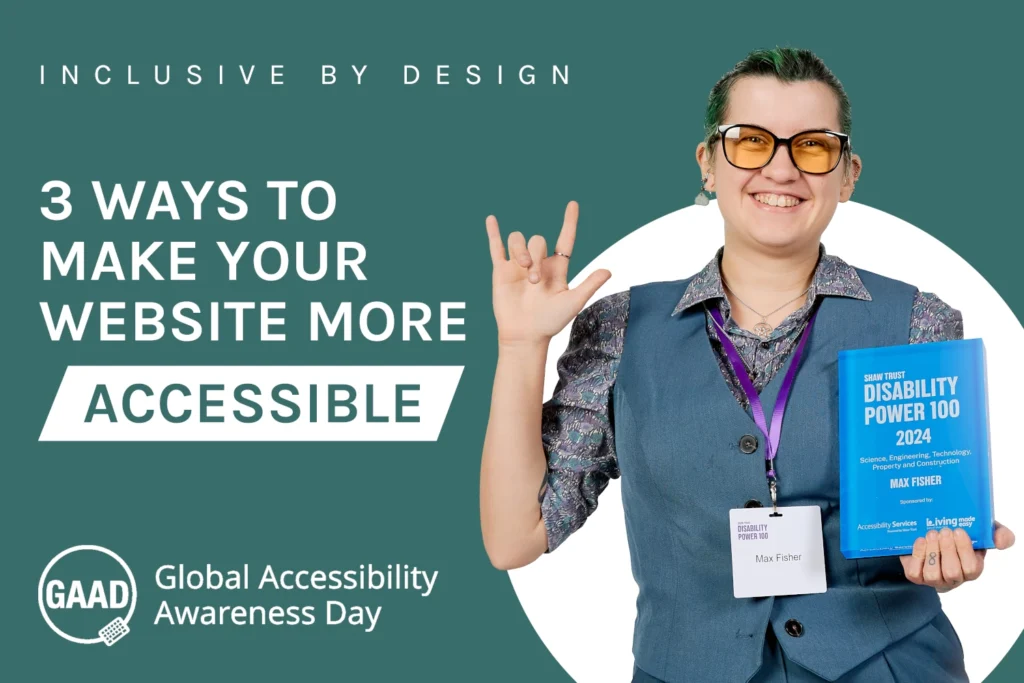
Photo: Shaw Trust 2024
Today is one of my favourite days: Global Accessibility Awareness Day! If your website is accessible, it means that EVERYONE can use it, no matter their ability.
Hi, my name’s Max, I’m DeafBlind, and I’m currently recognised as the UK’s most influential disabled scientist by the Shaw Trust. As a scientist, I use websites all the time, but they are not always accessible to my needs. Here are 3 things you can do to ensure your website is more accessible for people who can’t see as well as you can:
Make sure your website is screen-reader friendly!
A screen-reader is exactly what it sounds like- it’s a piece of software that will read aloud anything that is on the screen. It’s a common tool for blind and visually impaired people, but they can also be used by people with migraines, multitaskers, people who are learning a second language, and more… Every image you include on your website should have alt-text. Alt text is text that isn’t visible on the website, but can be accessed by screen readers in order to describe an image to the user. That includes pop-ups! If my screen reader can’t navigate your pop-up, I can’t use your website, and I’ll go somewhere else.
Alt Text describes the purpose of the image for those using screen readers.
Use Camel Case!
Camel Case is a screen reader’s best friend. When using a hashtag, capitalising the first letter of each word helps the screen reader to read the text accurately. It also improves readability in general, regardless of whether you’re using a screen reader or not. We all remember Susan Boyle’s infamous Album Party, right? Camel Case could have saved her…
Max kindly shared this video demonstrating the difference between a lowercase and Camel Case hashtag when read aloud by a screen reader.
Watch your colours!
Colours can make or break a brand. Did you know they can make or break accessibility, too? If you want to make bright, eye-catching content, make sure that we can all see it. Blind and visually impaired folks often benefit from high contrast between colours – typically one light colour, and one dark colour. On top of that, colourblindness can affect the way certain colour combinations are perceived. You don’t want your content to very literally blend into the background, would you?
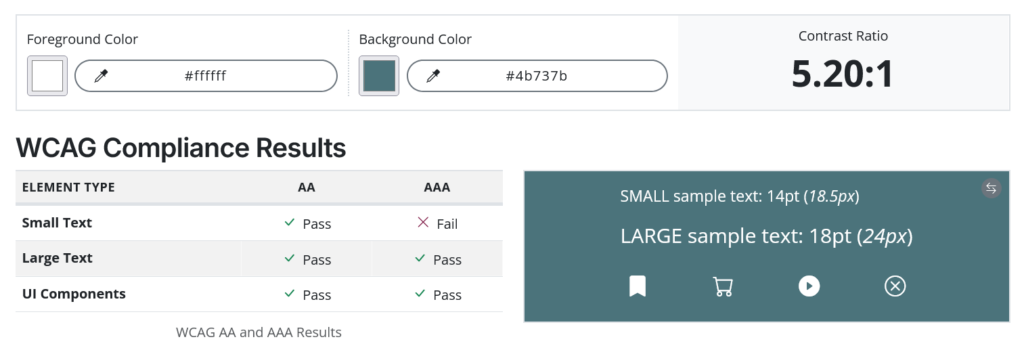
The Web Content Accessibility Guidelines (WCAG) ensure that text and visual elements on websites are readable by people with low vision or colour blindness. Tools like the WCAG Color Contrast Checker by accessibleweb.com (above) can help check compliance.
Why stop at just making your website visually accessible? Include your social media too! Post videos with subtitles so we can all be included! Your Camel Case hashtags will come in handy here. You can even post your alt-text into the caption for people like me who don’t use screen readers all the time, but might need some additional information about the image.
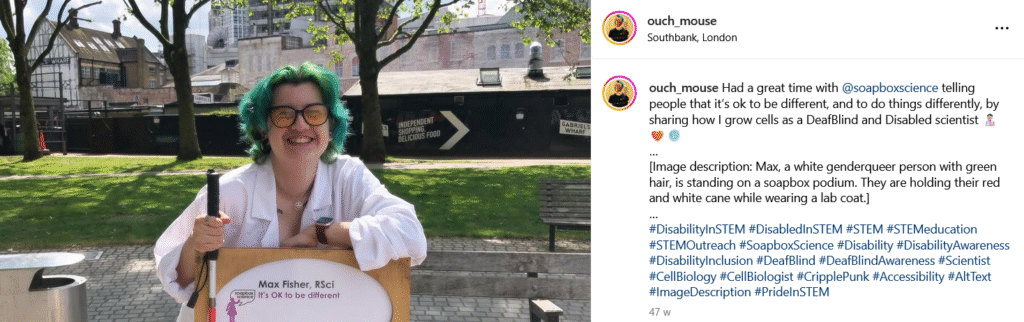
Max includes image descriptions in their Instagram captions to help those using screen readers understand more about the image.